Basement Leak Detection in Freehold Township, NJ
Discerning whether moisture in your basement originates from plumbing failures or external groundwater seepage. Our precision basement leak detection Freehold Township NJ diagnostics pinpoint the exact water source before expensive remediation begins.
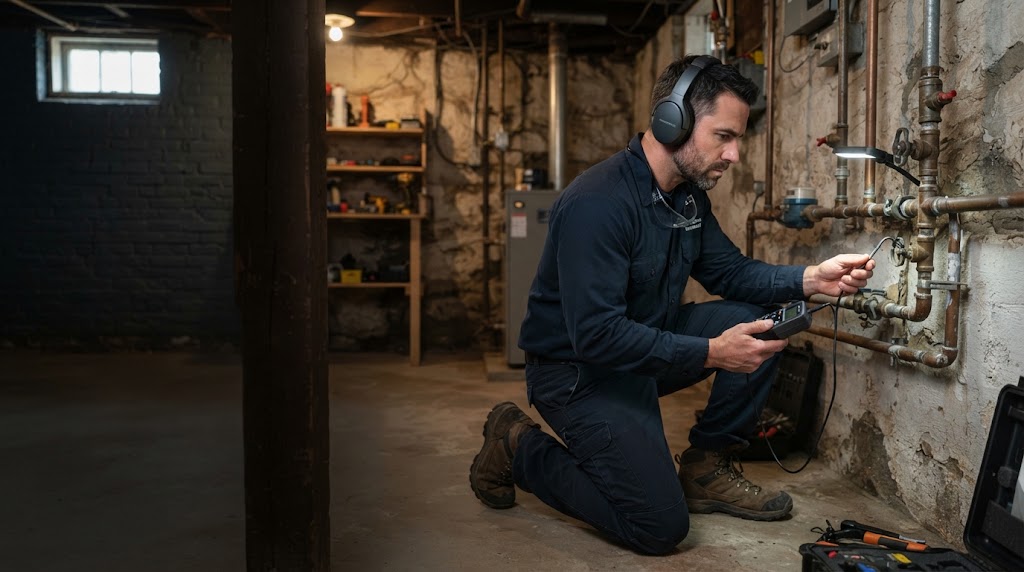
Plumbing Pipe Leak or Groundwater Infiltration?
Across East Freehold and West Freehold, countless homes built between the 1980s and 2000s feature expansive finished basements functioning as family recreation rooms, home offices, and guest suites. When unexplained moisture surfaces on carpeting or along perimeter drywall, homeowners face an urgent dilemma: is this a costly waterproofing issue, or an active water in basement plumbing leak Freehold Township plumbers can repair quickly?
Water heaters, overhead copper distribution runs, drainage stacks, and water softener loops frequently develop pinhole leaks or valve seal failures. Because water follows gravity, an overhead basement pipe leak Freehold Township homes experience can run down foundation concrete behind wall insulation and pool across the floor slab, closely mimicking seasonal water table rise.
Investing thousands of dollars in french drains or sump pump systems will not solve an active domestic water supply line rupture. Our comprehensive diagnostic process investigates your wet basement leak Freehold Township NJ issue to provide scientific, definitive verification.
Basement Moisture Warning Signs
Water pooling on basement floors continuously during dry, sunny weather spells.
Dampness or dark mildew lines spreading along bottom drywall baseboards.
The sound of hissing, dripping, or running water behind finished basement ceiling tiles.
Rust streaks or pooling water forming around water heater tanks and boiler fittings.
Unsure What Is Causing Your Wet Basement?
Get conclusive answers before spending money on unnecessary waterproofing. Call our diagnostic team.
Our Methodical Basement Leak Detection Freehold Township NJ Approach
We combine chemical analysis, acoustic sensing, and thermal diagnostics to distinguish potable pipe failures from foundation water ingress.
Chemical Tap Water Verification
We test pooling basement water samples for chlorine and fluoride traces. Their presence proves that escaping water originates from pressurized municipal plumbing rather than groundwater.
Potable System Isolation
We pressurize and monitor both hot and cold domestic plumbing loops with digital testing gauges to identify system pressure loss.
Thermal Moisture Trajectory Scanning
Infrared thermography traces cool thermal tracks backward from floor pooling up into finished ceilings, identifying overhead supply or fixture leaks.
Mechanical Drainage & Fixture Testing
We inspect water heaters, toilet wax rings, and drainage stacks to verify that sanitary waste lines are not leaking behind basement walls.
Resolving Your Basement Water Issue
Once diagnostic testing establishes the exact origin of moisture, you gain complete clarity on the necessary repair protocol. If a pressurized pipe or overhead fitting is leaking, a targeted surgical plumbing fix stops the water permanently at a fraction of the cost of basement waterproofing.
Common plumbing fixes include replacing cracked copper elbows, installing new shut-off ball valves, repairing corroded water heater connections, or replacing worn toilet seals directly above the basement. If our tests reveal that municipal plumbing is completely intact and external hydrostatic pressure is the culprit, we advise you objectively so you can consult licensed foundation specialists.
In New Jersey, domestic water piping repairs require an NJ licensed master plumber. Our objective diagnostic reports save homeowners thousands by preventing misdiagnosed projects.
Basement Leak Cost & Prevention Tips
Finished Drywall Obstructions: Pinpointing through finished ceilings requires acoustic and thermal tools to avoid tearing down ceiling sheetrock.
Water Heater Lifespan: Traditional tank water heaters in Monmouth County last 8 to 12 years. Annual flushing and anode inspection prevent sudden tank ruptures.
Sump Pump Discharge Checks: Ensure sump discharge lines clear foundation perimeters and have functional check valves to prevent backflow.
Basement Plumbing Challenges in Freehold Township
Finished basements throughout East Freehold and West Freehold often house extensive utility arrays, including secondary bathrooms, wet bars, and water conditioning systems. High mineral hardness in well-supplied areas and municipal chloramines can gradually pit copper pipes nestled between basement ceiling joists.
Because finished basement spaces conceal plumbing behind drywall, slow leaks can remain unnoticed for weeks, causing substantial structural framing decay and mold colonization before water visibly pools.
Emergency Basement Leak Indicators
Active spraying or heavy dripping through basement ceiling fixtures or electrical boxes.
Rapidly rising standing water threatening boilers, furnaces, or electrical subpanels.
Continuous water flow from a water heater pressure relief valve or ruptured tank seam.
Call our emergency phone line at (201) 510-1615 immediately.
Basement Leak FAQs
Common questions regarding basement water diagnosis in Freehold Township homes.
Determine the True Cause of Your Basement Water
Schedule non-invasive diagnostic testing with our Freehold Township leak specialists.